
Junny Signs to Sunreturn, Shares Kumara Suite
Junny Signs to Sunreturn, Shares Kumara Suite
March 10th, 2026
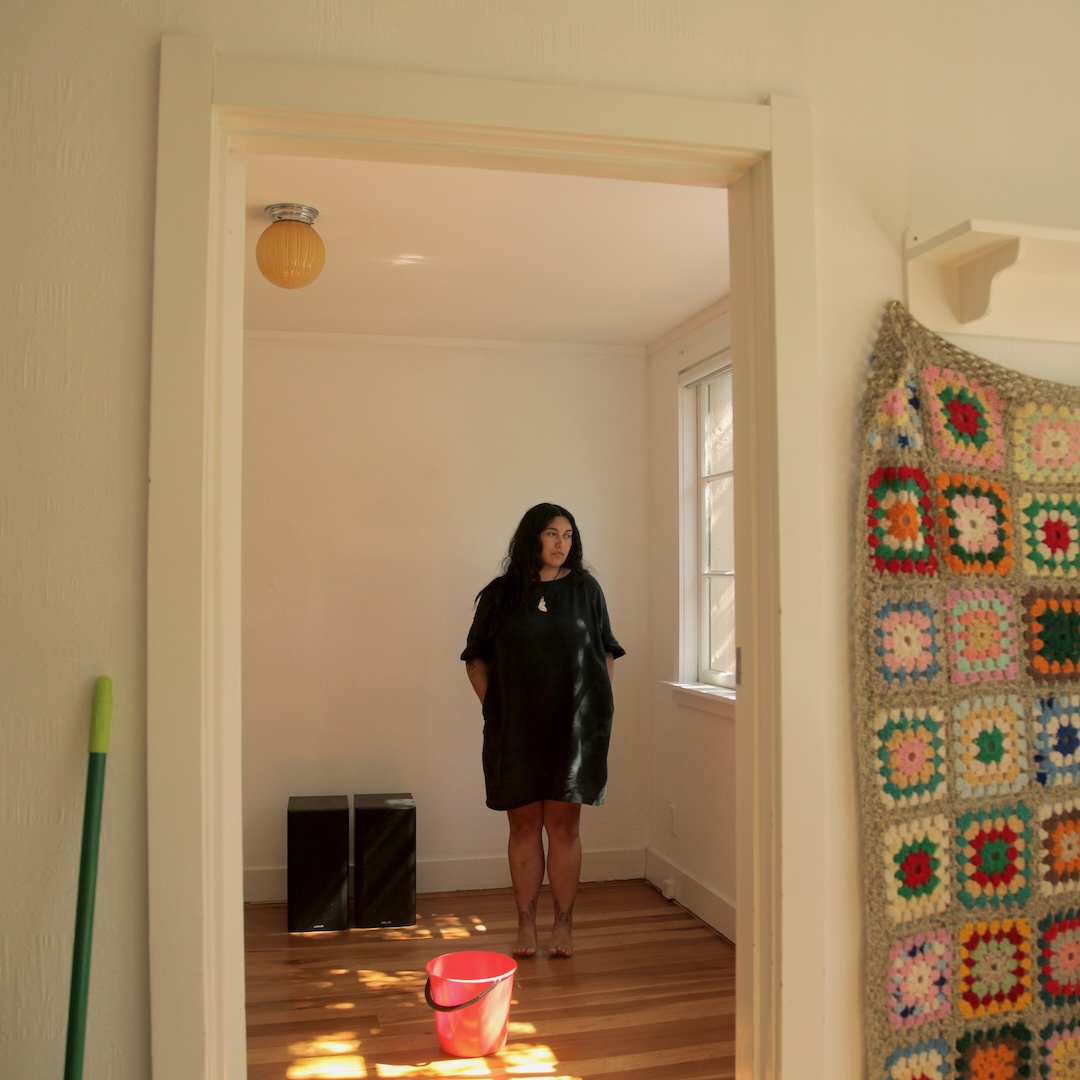
Junny is the musical project of Jenn Tamati (she/they, Te Arawa, Ngāti Tuwharetoa, Ngāpuhi), a vocalist and songwriter based in Whangārei.
Since 2020 Junny has established herself through frequent collaborations with award winning electronic producer Amamelia, providing aching toplines for her tracks ‘Sad & Lonely’, ‘Give Me Space’ and ‘Love Is Useless’. “I like condensing big thoughts and feelings down into simple phrases with lots of layered meanings,” notes Junny. “It helps me make sense of things.”
Having recently joined the Sunreturn roster, Junny is set to release their debut EP Kumara Suite on May 21. Alongside the announcement, Junny unveils the EP’s title track, which is “intended to tell a story of injustice, expressing frustration and anger, then self assertion and clarity, using simple words and raw elements. It is a protest song, a lot of my songwriting comes from that place.”
‘Kumara Suite’ was written & produced with Amelia Berry (Amamelia) as a part of the NZ On Air New Music Development initiative. Built on her breath ‘Kumara Suite’ sees Junny layer her vocals over a sparse, elemental electronic production.
“I had always heard breath in the track” notes Junny. “Its intent is driven by frustration, anger, claustrophobia and the physical exertion to push through. I think about breath as a human element and am aware of it in everything I do. So in the track it is used as an element of humanness and collectiveness. This is personal, not just an abstract concept. Te Hā is our shared vital life force, connecting us across generations and realms, and the beginnings of our kind shaped from the earth. Tāne Mahuta breathed life into Hineahuone, Tihei Mauri Ora!”
“I wrote Kumara Suite as I was finishing my BA where I’d scrutinised Aotearoa’s colonial history – racist legislation, discriminatory power structures and the systemic issues continuing to grow from those foundations. I was reflecting on the experience of being in a competitive academic institution as a Māori person, and what it meant to be celebrated, or not. The pressure to dominate the institution, especially as a Māori student, increasingly felt at odds with my Maoritanga, even when that identity was put on a pedestal.”
“This was late 2019 and the protests at Ihumātao had quickly gained public attention and support. In their call for the return and preservation of land at Ihumātao, Mana Whenua shared some whakapapa of that land to help assert the historical significance of the site (ancient kumara farms with evidence of the unique farming practice of lining garden beds with sun warmed volcanic rocks). I was really inspired by this story telling and the idea of representing value using literal raw elements (rocks, plants, dirt).”
“With all of this, the whakatauki was playing on my mind – Kāore te kumara e kōrero mō tōna ake reka (the kumara does not speak of its own sweetness). A lesson on the value of humility which in many contexts is valid and good. Though, in the context of repetitive injustices, perpetual humility felt more like a tool of oppression and self pacification than a moral good.”
“The focus on the earth was a welcomed return to myself, out of my head, feet on the ground. He tangata whenua ahau.”
Stream the debut single, ‘Kumara Suite’ here.